

The Acton Gardens phases is now two-thirds complete as of the end of 2025, and the last third is estimated to complete by November 2028. It’s now moving away from what is an actively developing site to and established and thriving neighbourhood in West London.
If you have been following the development, whether or not you actually in this area or you’re thinking about buying something in the area, you might be interested in knowing which phases are complete, which are still in process as well as what you can look forward to in the coming years.
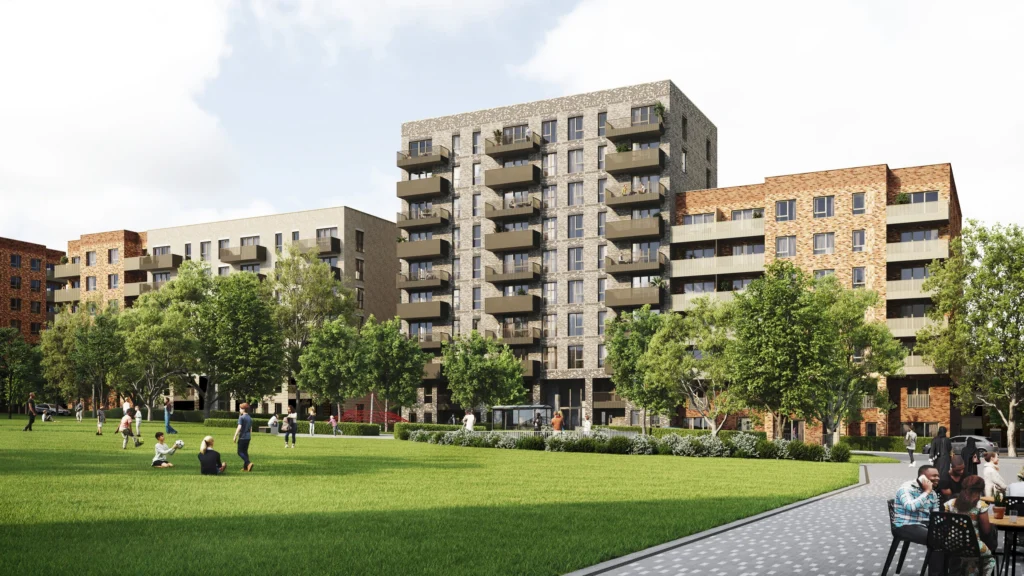
What’s Been Completed: Acton Gardens Phases 1-7
The initial 7 phases of Acton Gardens has created a total of 2,189 new homes since 2012. It’s reshaped what locals once knew as the South Acton Estate.
Phase 1 (2012-2014)
This was the foundation phase of the regeneration (designed by HTA Design) and it set really set the quality benchmark for all designs that have followed. The plan included rebuilding 203 homes in a mix of properties built around courtyard blocks and greenspaces, built to prove a concept. That modern homes built to Lifetime Homes Standards, achieving the Code for Sustainable Homes Level 4, while using durable materials like brick and stone cladding that residents would associate with “proper homes” instead of cheap modern builds.
This phase really changed the perception of a lot of sceptical residents the regeneration plans might actually work. It’s a burden that the first phases of any project will always carry: proving that promises being made will be translated into reality.
Phases 2-4 (2014-2017)
The original builders were responsible for building the next three phases, and they were able to complete an addition 763 homes by the end of November {year?}. There was a real focus on pedestrian-friendly streets, clear definition between public and private spaces, and passive surveillance (architectural language meaning “front doors facing streets so people feel safer”).
By the finish of the 4th phase, the regeneration had real momentum and residents could really see and feel the emerging neighbourhood instead of isolated buildings.
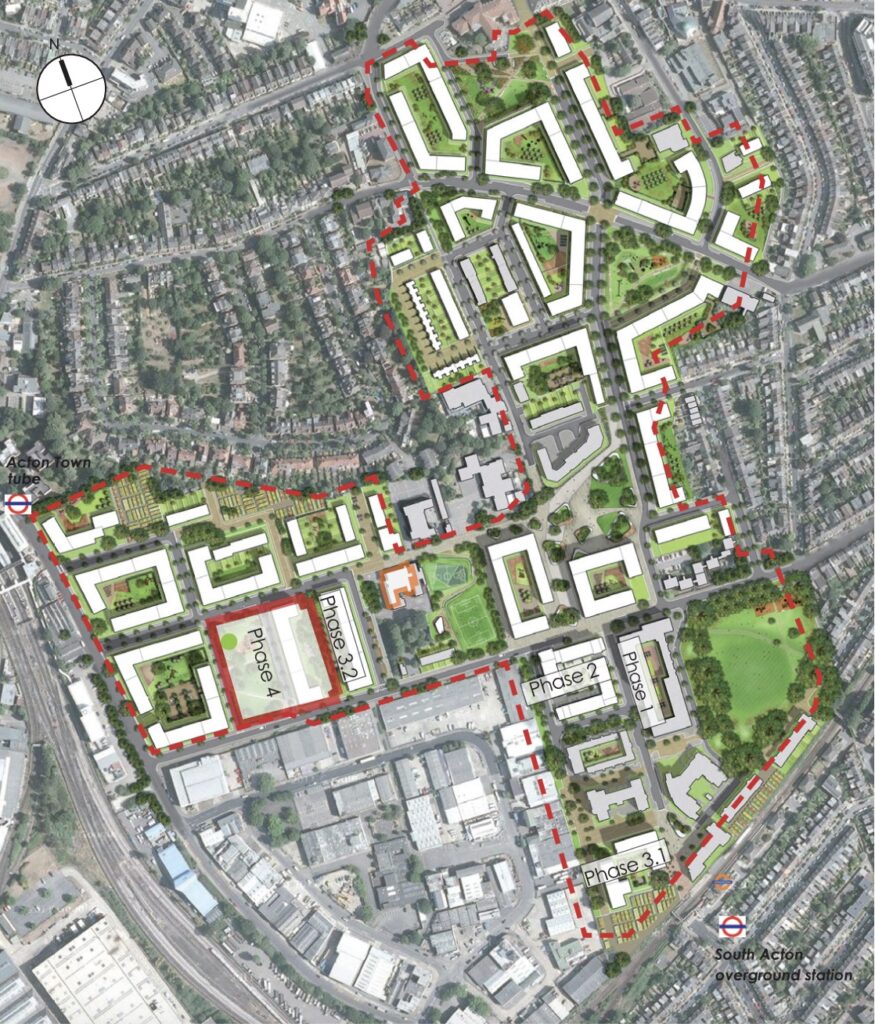
Phases 5-7 (2018-2023)
Stages 5 – 7 started to bring a bit more architectural variety as more practices started to contribute. Phase 7.1, designed by Stitch Architects, built the next 185 homes which included 44 Active Living apartments designed as independent living for over-55s that were designed to be adaptable to changing needs.
Phase 7.2 also introduced a game changing site-wide District Heating System. It acts as an energy centre designed to reduce the carbon emissions and improves air quality by cutting gas emissions across the estate, and will serve future phases as well. A reminder that this phased development is built on thinking beyond individual blocks.
By the end of Phase 7, Acton Gardens delivered its 1,000th affordable home, marking a pretty significant milestone during London’s affordable housing crisis. These homes aren’t just the lower-spec units that have been tucked away on the edge of London designed to meet affordable housing requirements. The regeneration’s focus on 50:50 affordable-to-private split means genuinely mixed-tenure developments throughout.
What the completed phases have delivered beyond just homes:
- The Acton Gardens Community Centre, which has been designed to host everything from co-working space to wellness events to youth programs.
- Fully developed play areas and landscaped green spaces designed to support the communities across generations.
- Improved pedestrian connections leading to the centre of Acton town and transport links.
- A range of retail spaces providing the community with local amenities.
Unlike a lot of regeneration projects, these aren’t theoretical facilities that have been left sitting empty. The independent research carried out by Social Life research tracked the experiences of residents to show thse spaces are being used, which really matters for anyone who is considering property here. If you’re looking to invest, facilities will only add value to your home if there are people actually using them.
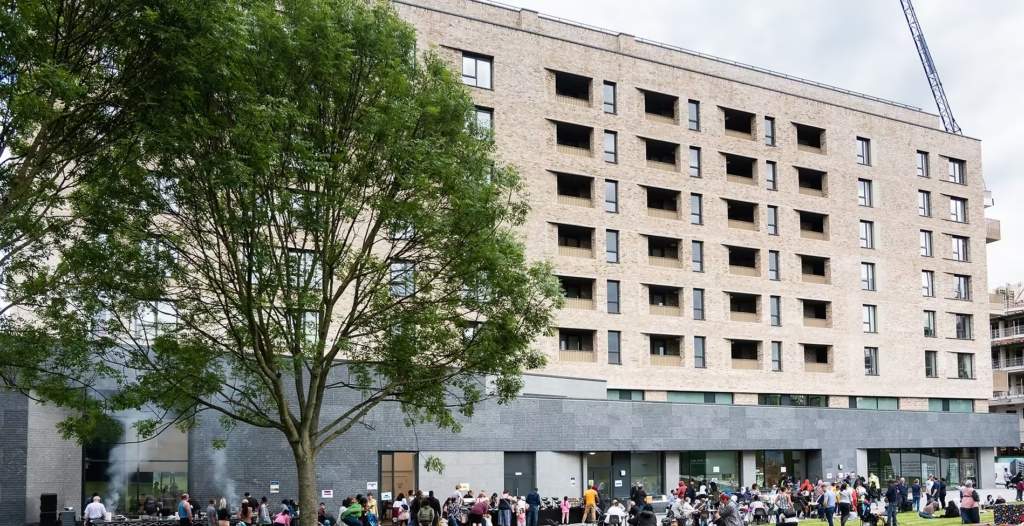
What’s Under Construction: Acton Gardens Phases 8 & 9
Phases 8.1 & 8.2 – 336 Homes
Stitch Architects designed the next phases and marked a major milestone for different reasons. They were the first buildings that received Gateway 2 approval from the Building Safety Regulator after building regulations changed post-Grenfell.
Gateway 2 required develops to meet rigorous design and construction standards before building work was allowed to begin. The stands means they were “designing in” safety measures instead of addressing them later. The fact that Vistry (formerly Countryside) was able to secure two approvals on a single project for their first applications really highlighted their strong technical capabilities and how engaged they were with regulators.
During these builds, 336 mixed-tenure homes will be completed. They’re built in central locations that link the Acton Gardens Community Centre to the Avenue Road to the north, helping to create important connectivity through the estate.
They continued to prioritise the pedestrian experience with wide pavements, generous landscaping, clear sightlines. Because how people move through a development affects whether it feels like a neighbourhood or just buildings clustered together.
These phases started construction in late 2025 and the first homes are expected to complete in 2026.
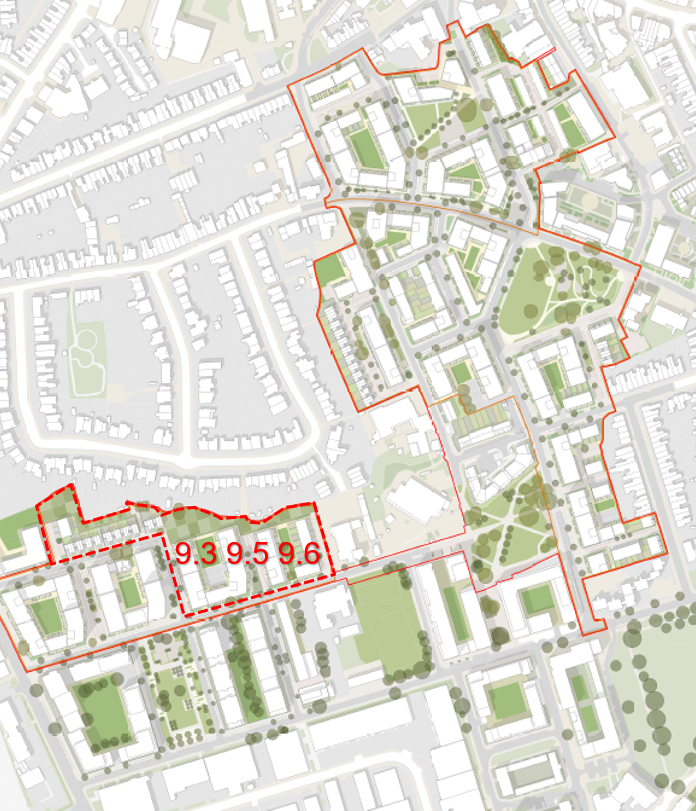
Phases 9.3, 9.5, 9.6 – 215 Homes
The other phases that are currently in process were designed by Pollard Thomas Edwards Architects. Like in the rest of the estate, 50% of homes will be affordable and they will be providing new public spaces include courtyard gardens at Phases 9.5 and 9.6, and there will private gardens build for all of the houses being built in Phase 9.3.
Another important thing to note for these phases is the reconfiguration and enhancement of existing allotments, which is going to create an enlarged area with micro-plots for residents. For some this might not sound like a big detail, but for residents of London who want to grow food or want green space that is designed for beyond just looking at it, allotments and micro-plots provide something you’ll find most London developments are neglecting – productive outdoor spaces for the community that’s at their fingertips.
In a recent development, Ealing Council recently secured 110 affordable homes from these phases, which will help accelerate the delivery of genuinely affordable housing in West London. The timing of this really matters: with skyrocketing rental costs that are squeezing out middle-income households across London, every new genuinely affordable unit helps.
The work on these phases started in the summer of 2022, with the first units being finished in 2024, and the others due to finish in 2026.
What’s Still To Come: Acton Gardens Phases 10-21
There will be another 1,200-1,300 homes built during the final phases, taking the total houses built across the project to 3,463 homes.
We don’t have full details on Phases 10-21 which is typical for phased development. With the continuous focus on research and refinement to meet changing demands and previous projects. But, the footprint of the framework has been set:
- The remaining houses will continue with the 50:50 affordable/private split.
- They will be made up of a mix of housing such as apartments, maisonettes and townhouses.
- There’s a continued focus on public space improvements and enhancements to the areas providing contectivity to the estate and the rest of London.
- Integration with completed phases since 2012 that will help create a cohesive neighbourhood instead of an estate build on distinct “phases” that feel separate.
During the last phases the rehousing of all existing South Acton Estate residents will be complete. It’s important to remember, at the project’s start, only 20% wanted to move into new homes. But the latest figures show us that now 94% wanted to stay. This dramatic increase from 20% to 94% is covered in depth in our article about the social impact of Acton Gardens, and is the type of shift that really help shape the community dynamics because these aren’t just new buyers. They’re residents with long terms connections to the area and the community.
Key Milestones in the Acton Gardens Timeline Through 2028
2025-2026
- Phases 8.1 & 8.2: First buildings will be completion from Gateway 2-approved homes.
- Phases 9.3, 9.5, 9.6: Ongoing construction and completions
- Planning applications for later phases submitted and approved
- There will be continued community engagement through the Acton Gardens Community Board
2026-2027
- Phases 10-15 (estimated): Construction is set to begin and progress.
- More community infrastructure will be delivered.
- District Heating System will be expanded to later phases.
- Continued rehousing of South Acton Estate residents who have decided to stay.
2027-2028
- Phases 16-21 (estimated): The final phases of the estate will be under construction
- November 2028: The current target completion date for the entire regeneration project.
- All public spaces and community facilities will be completed.
- The final residential moves will be complete
For anyone who’s already living in Acton Gardens, or considering buying property there, it’s important that you understand there’s still three years of construction activity. Construction noise, vehicle movements, temporary restrictions are going to be a part of the reality until the predicted end of the construction project.
But on the flip side. As phases complete, the estate is matures rapidly. Infrastructure is getting connected, the new green spaces mature and community facilities are reaching full operation meaning the sense of living in a building site is gradually shifting to living in an thriving neighbourhood.
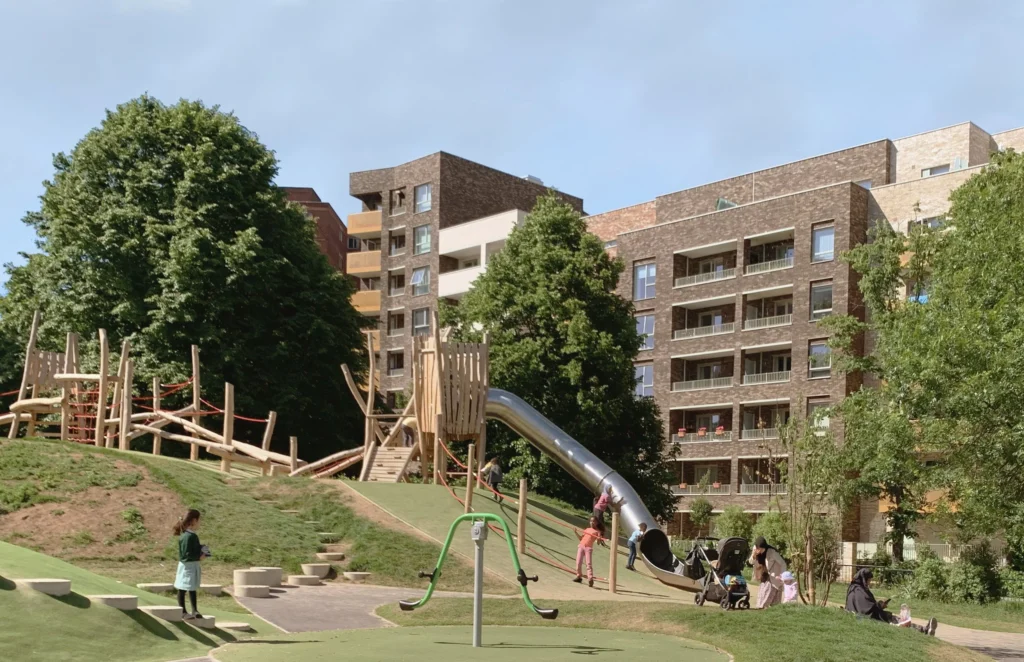
What Each Acton Gardens Phases Delivers Beyond Homes
This phased regeneration isn’t just about counting homes. Each stage has contributed to broader infrastructure and community building:
Connectivity
The first phases established the primary street layout. Middle projects (like the ones carried out in 8.1/8.2) create the north-south road linking Strafford Road with Avenue Park Road which has been key for creating connectivity across the estate. The next phases have been completing pedestrian and cycle routes that connect Acton Gardens to surrounding areas and key transport links.
Community Facilities
The Community Centre has really become an anchor in the development. Youth facilities (which was designed after research done with exisiting residents for the Community Development Plan) are being developed as the project comes to a close. Over the next few years the all important medical centre and nursery will be opened. These aren’t just add-ons to the designed. They’ve been treated as integral to the development and function of the who estate.
Public Space
By the end of the regeneration, 500,000 square feet of public space will have been built. This increase includes public parks, play areas, courtyards, and community allotments, which is going to be really key for property values. It’s no secret that areas with good public space will let faster and hold value better than those without.
Sustainability Infrastructure
The design and installation of the District Heating System, energy-efficient building standards, improved waste management, and green infrastructure (trees, planted areas, sustainable drainage) position Acton Gardens miles ahead of other developments around London when it comes to environmental performance. As regulations continue to tighten and tenant are starting to prioritise sustainable living, these aren’t just nice-to-haves. It’s a market advantage.
Market Implications: How phased Completion Affects W3 Property Values
Rental Demand Patterns
There isn’t uniform rental demand for homes in Acton Gardens yet. As more phases complete or start construction, there’s a fluctuation in the desirability of different areas.
- Properties that are central to the Community Centre benefit from their proximity to facilities and already have the feel of an established neighbourhood instead of a construction zone.
- Homes that are still surrounded by construction is going to see less demand until completion brings quieter streets.
- Later phases are benefiting from all the infrastructure already in place, which would mean potentially more premium rent once complete.
Property Values
Properties that were built in the earlier phases are now established and can provide some gauge for future prices. Properties are now moving from being “new builds in an active regeneration” and are becoming “established homes in a completed and thriving neighbourhoods” which is a completely different market positioning with very different buyer and investor appeal.
Properties that are in the completed phases are seeing values stabilise and potentially appreciate as disruption of construction is ending.That shift typically happens in the final 18-24 months of any large regeneration project.
The 50-50 affordable/private split mix means there is a range of tenure which is proven to create more stable communities than heavily skewed developments.
Investment Timing
For investors, phase timing matters:
- Buying in completed phases now: You’re buying property with proven demand but you’ll be paying current market rates.
- Buying in under-construction phases: There’s potential for better pricing but you’ll be living with construction. The properties real value will crystallise on completion.
- Waiting until 2028 completion: You’ll be missing an impact of construction but missing price appreciation during the final phases.
There’s no “right” answer to when to buy as you have to think about your risk tolerance and timeline. But, paying attention to where each phases sits will help you make informed decisions. If you’d like a bit more comphrehensive investment guidance on Acton Gardens properties, take a read of this piece.

Why The Acton Gardens Completion Timeline Matters
If you currently own a property in Acton Gardens, hopefully you’ll have more of an understanding about rental demand, construction impact, and when the area fully matures.
If you’re considering investment, you need to be thinking about what’s completed vs what’s coming next and how that’s going to affects everything from pricing to risk assessment to optimal timing.
If you’re simply keeping an eye on the West London property market, Acton Gardens represents nearly 3,500 new homes that are entering W3 over two decades. This number is a significant enough to affect dynamics in the rental markets and local facilities.
A lot of people will be happy that the regeneration is entering its final phases. Construction fatigue is no doubt effecting people who’ve been living in the estate during the last decade of building. But the end is now in sight and all the research is showing that the mixed, functioning community that was promised back in 2011 is turning into a reality.
If you’d like to discuss properties in Acton Gardens with a local property expert, reach out to our team today to discuss more.