

Take a walk around Acton Gardens today, and you may begin to catch glimpses of something new emerging in West London that has not been seen in decades: “a real mixed community emerging from one of the most exciting regeneration projects in the city.”
The streets are lined with a mix of modern apartment blocks, children playing in playgrounds, community centres that are hosting anything from coding workshops to wellness events. To break up the urban development you see a mix of local enterprises and green spaces which make it look like the type of neighbourhood that people actually choose to live in instead of end up in.
For anyone who lived in Acton before the early 2000s, they’ll be able to tell you about something that looks a lot different then it does today. The 52 acre site was built up with nearly 2100 council homes over the 30 years following WW2, ones that had aged badly. The countless tower blocks that fill the skyline were busy with maintenance backlogs, what little communal spaces that had been built were left unused and lead to a real lack of community.
It’s been a long journey from there to here – from a post-war estate struggling to create a community, to one of West London’s most successful regeneration projects. And it shows us a lot about what make urban renewal projects work and what wont.
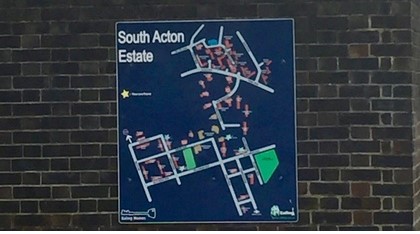
Where It Began
South Acton was already built up by the 1850s with terraced housing, some industry and the type of neighbourhood that we’d often see around railway junctions at the time. Which is why we can see these kind of areas taking such a beating during WW2. Nightly raids would often target anywhere with busy rail connections, meaning places like South Acton were badly damaged during the Blitz. At the end of the war, Acton fell into what would’ve been referred to as slum conditions, and so, the post-war solution was to clear it and start from scratch.
Between 1949 and the late 1970s, the South Acton Estate was built, made up of large tower blocks and low-rise council houses that you might be familiar with seeing around London. The estate took over 30 years to finish, and at it’s peak is housed 2,100 families in one of West London’s largest council estates.
When they were first built, the tower blocks seemed modern with clean lines and efficient use of space. These were the type of priorities driving planning after the war ended and for anyone who’d been living in bomb-damaged housing, these were a real step up into “proper homes” with indoor bathrooms and reliable heating. A massive improvement.
But, as anyone living in London has seen, estates like South Acton were designed with assumptions that didn’t have the proof to back them up. They were hoping large towers might foster community but ended up isolating a lot of people instead. Instead of people looking after communal spaced they were mostly left neglected and what was once deemed efficient designing ended up aging, and badly.
The Decline
The problems these estates ended up facing were clear by the 90s. Buildings ended up deteriorating faster than maintenance budgets were able to keep up. Blocks developed structural issues and design features that seemed clever in the 1960s like deck access, anonymous corridors, car parks tucked under buildings ended up creating safety concerns and spaces that felt uncomfortable to use.
Socially, the estate faced challenges too. There ended up being high concentrations of poverty and limited economic opportunities created a difficult cycle of deterioration.
This wasn’t unique to South Acton. Estates across Britain that were built in the post-war restoration wave were struggling. But as it was one of the largest estates, it means that the problems were extremely visible.
In 1999, Ealing Council attempted to carry out standalone refurbishment projects to fix specific issues. Some worked better than others, but it was quickly becoming obvious that the individual fixes weren’t going to be able to keep up with the continuing issues, and the estate needed a rapid change.
The two options were to pour massive investment into refurbishing what existed, or to rebuild entirely. The decision was made in 2008 by the council to focus on full-scale regeneration, and so Acton Gardens was set into motion.
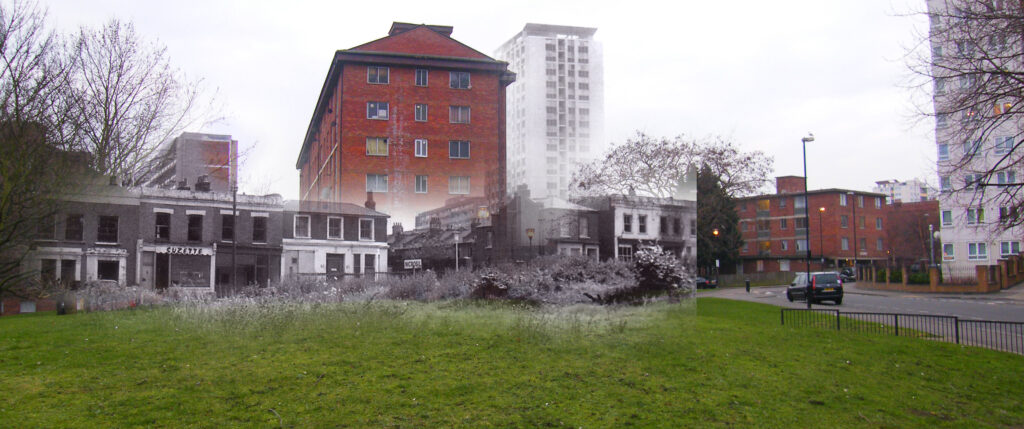
How the Transformation Began
Acton Gardens LLP was selected by Ealing Council in 2011 to lead the £800 million regeneration, and the scale of the project was enormous. It would start with the demolition of around 2,100 homes and apartments, and then replaced with around 3,450 new homes, delivered over two decades.
Half would be affordable housing (social rent, shared ownership, shared equity). The other half would be private sale and market rent. New community facilities designed to foster the community, a medical centre to serve residents, retail space, and 500,000 square feet of public space to be woven in-between buildings.
What really made Acton Gardens stand out from other regeneration projects has been it’s focus on the existing residents.
They prioritised providing options to residents instead of forcing them out of their homes. Secure council tenants were given the choice between new homes within Acton Gardens or help relocating to Ealing. For leaseholders, they were given fair buyback offers. And critically, the phased approach to the regeneration meant that people could move directly from old homes to their new ones.
These weren’t just nice words in a policy document designed to win public opinion over. They were an key part of the process to support the community, and it was continuously tracked and audited through multiple independent research studies over the last decade.
When Scepticism Became Buy-In
It was understandable that most residents were sceptical of the project. And why wouldn’t they be? There’s a patchy history of estate regenerations, with promises being made, communities get disrupted and often people ending up worse off than they started.
When the project kicked off, only 20% of South Actons residents wanted to move and the majority wanted to relocate elsewhere in Ealing. That’s a pretty clear sign of the lack of confidence they felt.
But there’s been a real shift and the latest research shoes us that 94% of residents now wanted to stay and move into new Acton Gardens homes.
Twenty percent to ninety-four percent. That’s not a gradual warming. That’s a undeniable reversal.
So the big question is, what changed?
They could see it working. By the time Phase 1 completed in 2014, it was more then just renders and promises. Residents could see actual streets, actual homes, and actual people living there. The first completed buildings set a standard that slowly started to convince sceptics this might actually turn out well.
The design evolved. Instead of sticking to a masterplan, architects Allies and Morrison were brought in to review and revise the design based on actual feedback. Because of this the later phases were able to benefit from lessons that were learned in earlier ones and residents were able to see that their opinions were being incorporated into designs.
The research proved it. Social Life carried out independent research over a decade, produced 4 studies and surveying over 1,650 people, giving insight into the estate and it’s residents. They proved that the developers have been able to actually meet their promises, and the sceptics have been swayed as a result of it.
The community were a driving force. By setting up the Acton Gardens Community Board, residents were given a genuine chance to influence how the regeneration progressed. Recommendations from research has shaped designs and people being able to see their concerns can lead to actual change has build trust.
It took time. It took ten years from partnership selection to 94% resident buy-in. That’s not a quick shift, but really that’s the point. Building trust and community isn’t something that can be rushed.
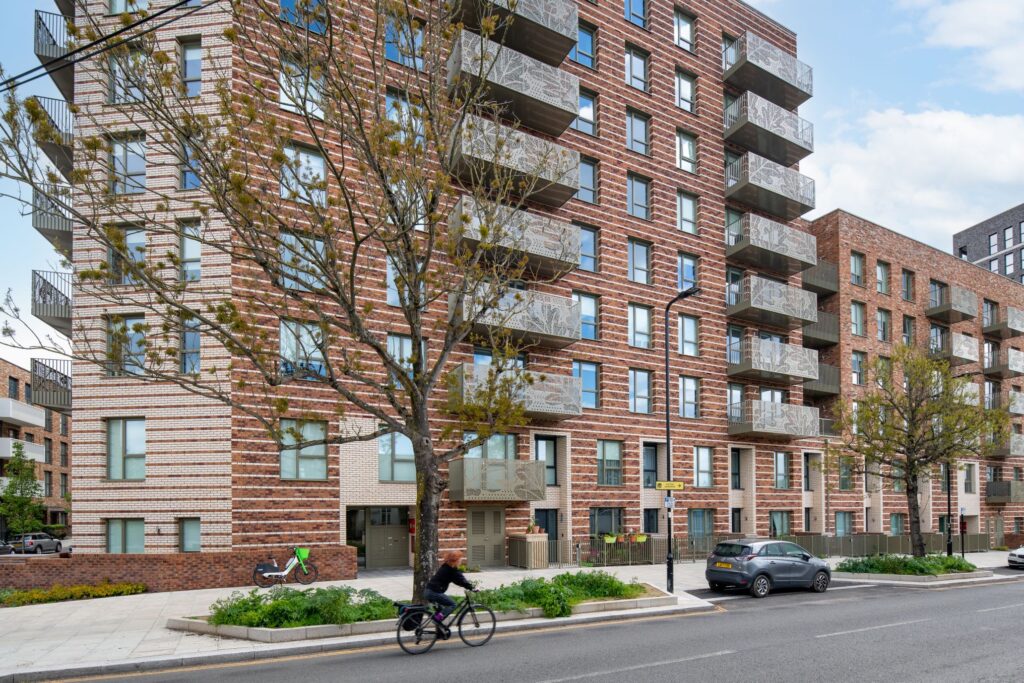
Why This Story Matters for Property Owners
If you’re considering property in W3, or you already own in Acton Gardens, this history isn’t just background. It’s evidence of whether this particular regeneration is going to succeed long-term.
Estate regenerations historically go one of a few different ways ways. Some fail to gain resident buy-in and become battlegrounds. Some deliver physical improvements but never succeed in building functioning communities. Some start strong and falter midway when funding tightens or developers lose interest.
Acton Gardens appears to be avoiding those pitfalls. The 20% to 94% swing in resident buy in shows that something is working. The independent research showing measurable improvements in safety, satisfaction, and wellbeing backs that up. The long-term partnership structure (L&Q remains as landlord and manager, providing continuity) means this isn’t a “build and disappear” development.
For landlords, areas that have high satisfaction amongst tenants maintain strong rental demand and tenant retention, and research shows Acton Gardens is tracking in the right direction on both fronts.
For investors, it shows the development is creating genuine value instead of just focusing on volume. Property values in successful regeneration areas outperform those in developments that remain soulless or fail to establish community cohesion and the fact that residents actively want to be there is a positive sign.
And, for anyone considering moving to the area, whether buying or renting, this story provides context. You’re not just moving into new builds, you’re moving into a development that’s been successfully been shaped by a decade of resident feedback, built by multiple architectural practices and deliberately designed to function as a neighbourhood instead of yet another housing scheme.
Of course this doesn’t guarantee success, but it suggests decent odds. To understand what’s been completed, what’s under construction, and what’s coming by 2028, take a look at our detailed phase breakdown of Acton Gardens.
From Struggling Estate to Functioning Community
The transformation of South Acton from post-war estate to what’s emerging now as Acton Gardens isn’t a simple tale of “old is bad and new is good.”
South Acton served a crucial purpose in it’s time. It was the home to thousands of families who had built lives there and represented a vison of social housing that seemed right at the time, even if the ideas weren’t able to hold up over time.
The regeneration of South Acton isn’t about erasing that history. A lot of it’s current residents lived in the old estate, and their opinions and experiences shaped what’s being built.
There are still challenges. Not everyone is happy.
Some residents feel pushed aside by regeneration. The effects of the pandemic still has an impact on community life. Construction disruption remains a reality for those in later phases.
But the direction has been measured over ten years by independent researchers, and we can see that the regeneration is working better than most. And it’s why Acton Gardens, as it approaches completion over the next three years, offers something West London hasn’t had enough of: proof that this kind of transformation can actually deliver.
David English provides property services across West London, including specialist knowledge of the Acton regeneration area. Whether you’re considering investment in Acton Gardens or need expert management for your W3 property, get in touch.